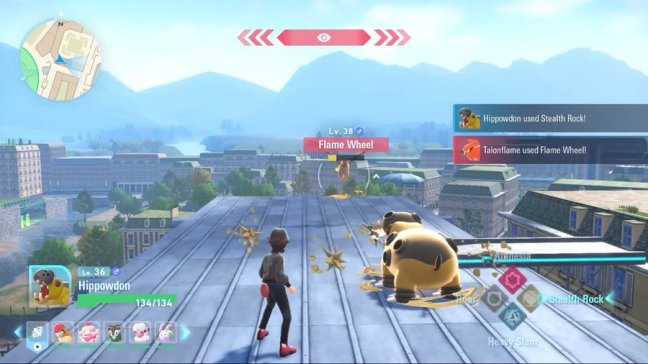
Pokémon battle systems are built on multiple hidden and visible mechanics that determine how strong a Pokémon is in combat. These mechanics exist across mainline games such as Pokémon Scarlet and Violet, Pokémon Sword and Shield, Pokémon Legends: Arceus and other modern titles. Understanding how these systems work helps explain why two of the same Pokémon can perform very differently in battle.
This hub explains the core battle mechanics that influence stats, performance and competitive viability.
Individual Values (IVs)
Individual Values, often called IVs, are hidden stats assigned to every Pokémon when it is encountered or hatched. These values determine a Pokémon’s maximum potential in each stat category.
Each stat has its own IV value:
- HP
- Attack
- Defense
- Special Attack
- Special Defense
- Speed
Higher IVs result in stronger stat growth at higher levels. IVs cannot normally be changed without special in-game systems such as Hyper Training in modern titles.
Effort Values (EVs)
Effort Values, or EVs, are earned through battling and training. Unlike IVs, EVs are fully controlled by the player and determine how a Pokémon’s stats grow over time.
Key EV mechanics:
- Battling specific Pokémon yields specific EV gains
- Vitamins and items can increase EVs faster
- EVs are capped per stat and overall total
EV training is a core system for competitive team building.
Nature system
Every Pokémon has a Nature that slightly increases one stat while lowering another. This system helps differentiate Pokémon of the same species.
Examples include:
- Adamant: increases Attack, lowers Special Attack
- Timid: increases Speed, lowers Attack
- Modest: increases Special Attack, lowers Attack
Natures are one of the most important optimization systems for competitive play.
Ability system
Abilities are passive effects that influence battle behavior. Each Pokémon species typically has one or more possible abilities.
Abilities can:
- boost damage under certain conditions
- provide immunities or resistances
- modify weather or terrain effects
- change how moves behave
Hidden Abilities also exist and are often only available through special methods or events.
Type effectiveness system
Type matchups determine how effective moves are in battle. Each type has strengths and weaknesses against others.
Key interactions:
- Super effective moves deal double damage
- Not very effective moves deal reduced damage
- Immunities negate damage entirely in some cases
Type strategy remains one of the core pillars of Pokémon battle design.
Stat stages and battle modifiers
During battles, stats can be temporarily modified through moves or abilities.
Examples:
- Attack boosts
- Defense drops
- Speed increases
- Accuracy and evasion changes
These effects reset after battle and are crucial in competitive strategies.
Critical hits and damage variation
Battles include built-in randomness through:
- critical hit chances
- damage roll ranges
- secondary effect probabilities
These systems ensure battles are not fully deterministic and add variability to outcomes.
Why these mechanics matter
All Pokémon battle systems work together to create depth in both casual and competitive gameplay. IVs, EVs, natures, abilities and type matchups combine to determine how effective a Pokémon will be in any given situation.
Understanding these mechanics is essential for:
- competitive battling
- story progression optimization
- raid and endgame content
- team building across all modern Pokémon games


2 thoughts on “All Pokémon battle mechanics explained (IVs, EVs, abilities, natures and hidden stats across mainline games)”