
The Pokémon Company has revealed more details regarding the 2023 Pokémon Championship Series. Read on below to learn more:
2023 Pokémon VGC North America International Championships Roundtable Preview
Our trio of experts discuss the upcoming clashes in Columbus.
The 2023 Pokémon VGC North America International Championships come at a pivotal time in the 2023 Championship Series season. As the last major event before the World Championships, players have extra motivation to do their best to secure their invitations and Travel Awards. Plus, as the largest event of the year, there’re a lot of bragging rights on the line for Trainers that can hold their own in this enormous field. Players have had time to refine strategies that utilize the new Terastallization mechanic and the Ruinous Pokémon found in the Pokémon Scarlet and Pokémon Violet games, so fans can expect to see polished, high-level play.
We’ve once again brought together a trio of top-tier players—Aaron Traylor, Aaron Zheng, and Markus Stadter—for a roundtable discussion on what to expect in Columbus. They discuss trends in team strategies, top Trainers to keep an eye on, and what they’ll be watching for when the matches begin.
Remember that you can watch three full days of Pokémon VGC action on Twitch.tv/Pokemon from June 30 through July 2, when we’ll find out who will earn the next title of North America International Champion.
Chris Shepperd: Thanks again for joining another roundtable. I know I learn a lot from them so I’m hoping the fans do too. Let’s begin! First, what are the stakes for NAIC? What are people playing for?
Aaron Traylor: I think there are three main camps of people to look out for at NAIC: the people playing for the glory of the title (this is everyone), the people who need some Championship Points to lock up their Day 1 Worlds invite, and the few people who are in the Day 2 race.
Traditionally NAIC is the biggest event each year, so of course the stakes are high!
Aaron Zheng: NAIC is the last shot at major Championship Points towards qualifying for Worlds and the last major Regulation Set C tournament. There will be a ton of players who are looking to secure their invitation to Worlds from it.
Markus Stadter: Here in Europe, the season is almost over and NAIC will mostly be important for the Day 2 race. Traditionally NAIC is the biggest event each year, so of course the stakes are high!
Traylor: Glory is big, but so is the tournament—there are 950 people already signed up, I believe?
Zheng: Yes, it might end up being the largest VGC tournament…ever? It would have to beat out Orlando Regionals, which had 782 players in the Masters Division.
Stadter: For North America, it will be interesting to see who can reach the Top 8 for the Day 2 invite to Worlds. So many great players and great performances throughout the season, but in the end only 8 players from the region get to skip Day 1.
Shepperd: Does the size of the field affect a player’s preparation in any way?

Zheng: I think for a larger tournament, you have to be prepared to play against any team or strategy—players may want to find strategies/teams that are more consistent (rather than trying to really counter the “metagame”).
Stadter: I think at this point in the format, most players have found teams and strategies that they are comfortable with. So for NAIC, I expect a lot of comfort picks and solid teams with top players aiming to outplay their opponents.
Traylor: I think you just have to be ready to do your thing well, if that makes sense. Have a strategy and execute it better than anyone else.
Shepperd: How sturdy is the metagame right now? Is there a common team or teams that players are expecting to see more?
Stadter: There definitely have been some changes in the metagame since the last time we talked before EUIC.
Traylor: I think the parameters of Regulation Set C are pretty well-defined at this point. There are very few surprises—every player is pretty comfortable with the top Pokémon, e.g. Arcanine, Amoonguss, Flutter Mane, Gyarados, Iron Hands…the usual suspects.
Stadter: The standard bulky team uses Gyarados as the Water type, making Palafin not so common anymore. Also there seems to be a trend recently where Ruinous Pokémon are not on every team anymore.

Shepperd: Interesting. Ruinous Pokémon were a huge subject in our last chat.
Traylor: Wo-Chien is having a rough time out there, but I think it always was.
Stadter: They are still very common, but in the Fresno Regionals neither finalist had one on their team.
Traylor: Ting-Lu and Chi-Yu are pretty integral parts of a lot of the top teams that I’m seeing, to be honest.

Zheng: There’s a team of six that many top players have been using: Flutter Mane, Amoonguss, Chi Yu, Gyarados, Ting-Lu, and Iron Hands. Brian Youm won Hartford Regionals with it, Paul Chua finished 4th at Milwaukee with it, Wolfe Glick finished 3rd at Hartford with it, and Riley Factura finished 4th at Fresno with it. The team speaks to a lot of metagame adaptations lately—Iron Hands usage feels like it has skyrocketed.
Stadter: The Gyarados / Iron Hands / Chi-Yu set was already used during EUIC, but I feel like it became much more popular since then.
Zheng: Yeah, Simone Sanvito finished 2nd at the Turin Special Event with the same six and Luca Ceribelli finished 6th.
Stadter: I would say it’s the most common team right now, but it is really flexible with items and tech moves or Tera Types, so it’s tough to be prepared.
Traylor: Do you guys think this team will do well at NAIC? Or is it sort of played out?
Stadter: I think we’ll see it in Top 8.
Shepperd: As you mentioned, Aaron T., this is the last event under the Regulation Set C rules. Is there anything top players can learn about this event that will apply to Worlds?
Zheng: To be honest, I think this will be the least impactful NAIC in terms of lessons for Worlds. Worlds is a completely different format.
There’s no need to hide anything for Worlds, so players can bring what they believe to be the strongest strategies.
Traylor: Seconding Aaron. The main thing to learn from NAIC for Worlds competitors is to have something that you do well and do it…well.
Stadter: It also means everyone can go full out. There’s no need to hide anything for Worlds, so players can bring what they believe to be the strongest strategies.
Zheng: There are always general lessons you can learn: was your practice routine good? How about your team-building process?

Traylor: I’ve been playing Regulation Set D and trust me when I say it is a whole new world. I got cleaned up by a Brambleghast last night.
Zheng: But unlike other years, where NAIC (and Nationals, back in the day) would maybe set the meta and give players a good sense of what they should be countering for Worlds, this year is completely different.
I think about US Nationals in 2014 for example. Choice Specs Hydreigon was everywhere in that tournament and that format in general, and it won US Nationals. Going into Worlds that year, I knew it would continue to be popular and US Nationals reaffirmed that thought so I used Choice Specs Salamence (which outspeeds Hydreigon and can knock it out with a single attack).
Stadter: I find it pretty exciting.
Shepperd: I was going to say, Markus. That sounds like the makings of a really fun tournament.
Traylor: I am also excited for Worlds being a whole new format. But NAIC competitors can’t really enjoy that excitement yet!
Zheng: I feel like historically, it’s been a conservative event with not too many off-the-wall teams when people are trying to save their best strategies for Worlds. But Regulation Set D is going to be so different. I’m mainly curious about any potential innovative team compositions at NAIC.
Traylor: Aaron, can you give us a taste of what that innovation might be? Is there anything that comes to mind?
Zheng: I still think Trick Room is underplayed in Regulation Set C personally.
Traylor: I was about to say that. Is Alex Soto going to NAIC? He’s like the Trick Room guy.

Zheng: We’ve seen some interesting teams around it: Gavin Michael’s rain team has Trick Room Flutter Mane, there’s been a team with Bronzong/Abomasnow/Ting-Lu/Vivillion, and Emlio Forbes (who just won Fresno Regionals) even had Trick Room on his Choice Specs Flutter Mane. Jamie Boyt used a really interesting Power Band Scream Tail to finished Top 32 at one of the European Regionals, too.
Traylor: I LOVED that Flutter Mane. Huge fan of how it put pressure on its opponents.
Stadter: Another beauty of open teamsheet.
Traylor: There have also been a few players in the US piloting Indeedee/Armarouge Trick Room next to Dondozo/Tatsugiri and Lycanroc/Tyranitar sand (that’s all one team!)—Adrian Hurley, who got Top 32 at last NAIC, and Ben Grissmer, among others. That team is so scary.
Stadter: But you are talking about a dedicated Trick Room team, Aaron Z.? Or just in general?
Zheng: I’d say more dedicated Trick Room.
Shepperd: How does something like Trick Room become underutilized? It’s been a staple of competition forever.
Zheng: I think Trick Room can struggle a bit more when teams are really bulky and you can’t KO Pokémon quickly enough while Trick Room is set up. In addition, Amoonguss is everywhere right now in the format, and a good defensive Tera Type (e.g. Water) allows you to survive a powerful attack from a slow attacker and just respond with Spore.
Shepperd: The Paldean era has been pretty bulky all along, hasn’t it?
Stadter: Terastallizing can allow you to escape a difficult situation under Trick Room, when you would be pinned without it. So it’s an additional thing Trick Room has to overcome. Bulky offense seems like the preferred strategy in Regulation C.
Traylor: Yeah, with bulky offense, it’s the case that each Pokémon can switch in and take a hit, as well as deal out damage that complements the rest of the team. Pokémon like Flutter Mane and Iron Hands lend themselves really well to this.
Stadter: I have a feeling that might change with Regulation Set D…
Shepperd: Aaron T., before we began, you asked to make sure we talk about the Japan National Championships, which took place in early June. I’m really curious to hear how what happened there plays into NAIC.
Traylor: Often strategies from Japan Nationals bubble up and make their way to NAIC given how close the two tournaments tend to be, which is why I wanted to talk about it.

Zheng: Did you guys know Stantler got Top 8 at Japan Nationals? With—you guessed it—Trick Room.
Stadter: Yes, I saw that!
Zheng: There was also a Bronzong with Trick Room that finished in the Top 8.
Traylor: When I think about Stantler, I think about when Ashton Cox used it in 2015 or 2016—it was a big deal then, too. Ashton, if you’re reading this, bring Stantler to NAIC. It’s what the people (me) want.
Zheng: Gyarados is also one of the most common Pokémon right now and that loves to run Taunt. I had no idea Ashton used Stantler, but that totally checks out.
Stadter: Japan Nationals had a bit of a different format than what we are used to, so I’m not sure how much I want to read into the teams.
Zheng: I agree, Markus. It’s such a dramatically different format: best-of-one double elimination with best-of-three Grand Finals, closed team sheets in Day 1 and open team sheets without Terastallization in Day 2. But I think it’s always good to look at the top strategies and understand why they succeeded. For example, Maushold/Annihilape won. That team also had Talonflame and Grimmsnarl for support.
Traylor: Grimmsnarl is underrated in general, I think.

Zheng: I wanted to bring up Maushold/Annihilape in particular because I feel like that duo still is underplayed in general too. We’ve seen a couple more players bring it to events in North America recently, such as Nick Navarre and Zach Thornberg, who just finished 3rd at Fresno Regionals with it.
Traylor: Yep, Zackary Thornberg just got Top 4 in Fresno with a fresh take on Maushold/Annihilape—he’s been doing extremely well at tournaments all season.
Zheng: This duo is interesting because it hasn’t necessarily dominated events, and most top players haven’t been bringing it to events that much.
Traylor: Paul Ruiz also brought it to EUIC and got Top 8 there—the set in which he lost to Gabriel Agati was closer than the results made it seem, in my opinion.
Zheng: Yeah, Paul deserves a huge mention here. He did super well at EUIC with it and finished 2nd at a Regionals with it too.
Stadter: People have joked for a while that it’s not necessary to have a Maushold/Annihilape matchup in Regulation Set C, yet people are scared by it from Regulation Set A and try to beat it. I think for NAIC you should have a plan to deal with it. Having won Japan Nationals just proves again how strong it is, even though I don’t particularly expect any itemless Talonflame, like the winner of Japan Nationals used, at NAIC.
Shepperd: What makes that combination strong against the typical field?
Zheng: The general strategy behind Maushold/Annihilape is that you can use Beat Up to quickly stack up Annihilape’s Rage Fist, allowing it to deal massive amounts of damage right away. Maushold can also reduce the amount of damage Annihilape takes thanks to Friend Guard, as well as redirect attacks with Follow Me.

Traylor: The tricky thing about Maushold/Annihilape is that there’s often no good way to beat it every time, given that both Pokémon can use Protect, can Terastallize to defend themselves from damage, and are generally bulky with the way they are usually trained.
Zheng: The combo can take advantage of teams that don’t have a lot of immediate damage output and out-trade them in terms of damage. Also, since Intimidate is quite common right now (through Gyarados and Arcanine, primarily), Annihilape can take advantage of it with its Defiant ability.
Stadter: Maushold can also be used to support other offensive Pokémon like Gholdengo on that team.
Traylor: We just talked about how important bulky offense is in Regulation Set C. Well, Aaron, those traits are really useful versus bulky offense.
Shepperd: Terastallization has been brought up a few times now. Do players have a pretty good grasp on how to implement it? Or does it still feel new in the sense that players are still trying to figure it out?
During battles, I feel like players are making a lot of good decisions around when and how to use Terastallization.
Stadter: As the metagame becomes more and more stable, I think one thing players are not considering too much yet is that you will meet certain Pokémon with a specific Tera Type more often. For example, it might make sense to prepare not only for Iron Hands in general, but specifically for Grass–Tera Type Iron Hands. During battles, I feel like players are making a lot of good decisions around when and how to use Terastallization. But like with any new mechanic, it will take some more time until we truly master it.

Traylor: That’s an interesting question. I feel like most uses of Terastallization are pretty well-defined. Most Pokémon use it defensively to cover a weakness, whether it be an attack type they are weak to or an Amoonguss’s Spore.
I think that if you had asked me in June of 2020 how players considered Dynamaxing, I would’ve said that we mostly had it figured out. But the truth is, we learned a lot about Dynamaxing in 2021 and 2022 that we hadn’t known in 2020. So I would say there’s probably a lot of interesting stuff to be discovered.
Shepperd: Does Terastallization allow for strategies that are really out of left field?
Zheng: Hm, I actually think Dynamaxing enabled for more strategies that come out of left field. Terastallization is a more fluid mechanic in my opinion—it’s tricky to know when to Terastallize and what Pokémon to Terastallize.
Stadter: Dynamax could turn any Pokémon that has a Flying-type attack into an offensive supporter. With Terastallization, I feel like you have to be more deliberate when using it. It will not always grant you an advantage—and sometimes it might even be disadvantageous to Terastallize.
Zheng: I don’t think we’ve really seen too many super out-of-left-field strategies with Terastallization in bigger tournaments. I think the main reason for this, though, is that western tournaments use open team sheets and a best-of-three play format—it’s a lot harder to execute a surprise strategy if your opponent knows about your Tera Type, held item, and move list.
Traylor: One thing that was interesting from the Japan Nationals was runner-up Hodaka Hatakeyama’s team. He had Poison–Tera Type Annihilape (already a strange defensive choice, but it makes sense because Poison resists Fairy) with Gunk Shot (also a strange move choice). So his defensive Tera Type choice could also help Annihilape become more offensive. I believe his Mimikyu was also Grass–Tera Type, and it knew Wood Hammer, which was again a strange move choice that benefits from the Tera Type in the same way.
Zheng: Yeah, and Japan Nationals did not reveal the Tera Types throughout the tournament, so you can see why it was more effective to use those kinds of strategies!

Shepperd: Since we’re talking about what we see in big tournaments, I want to ask: If you were watching the stream at home, what would you be focusing on or looking forward to seeing happen?
Stadter: Flutter Mane play and Flutter Mane counterplay is still a very big part of the game right now. Choice Scarf Gholdengo is the newest trend in a line of things that can out-speed and KO Flutter Mane in one hit. Some others include Helping Hand Abomasnow/Ice–Tera Type Iron Bundle with Choice Specs. Seeing how players use their Flutter Mane is always interesting to me. You can lead with it and get some damage down early on, or you can keep it in the back and bring it in when the opposing team is weakened.
Traylor: One of the most exciting things for the viewers at home will be tracking the Day 2 race for the North American players as they battle it out throughout NAIC. There are about 15 or so players who are competing for those Top 8 slots, nearly all of them have been competing for years, and nearly all of them are having one of the best seasons of their lives. I think the battles are absolutely going to be top-notch as these players vie for the Day 2 slots.
Stadter: I hope we get a lot of head-to-head matchups between these players.
One of the most exciting things for the viewers at home will be tracking the Day 2 race for the North American players as they battle it out throughout NAIC.
Traylor: Getting that qualification to Day 2 is so meaningful for each of these players, and they’re really going to be leaving it all on the line.

Zheng: I have my eyes on a couple of key meta trends going into NAIC:
- “New” balance, which is what the community uses to refer to the Ting-Lu/Flutter Mane/Iron Hands/Gyarados/Amoonguss/Chi-Yu team.
- Dondozo: It feels like Dondozo has gotten Top 8 or better at every major this year. How will people continue to innovate around it?
- Weather, especially Rain: the team of Amoonguss/Flutter Mane/Gholdengo/Azumarill/Pelipper/Iron Hands has done super well lately.
- Paradox Pokémon: Iron Hands, Great Tusk, and Scream Tail. The first two have had really dominant performances in recent events, while Scream Tail has not been used as much but has had some notable finishes.
- Recent Pokémon with good finishes: Orthworm and Grimmsnarl.
Stadter: Orthworm/Ting-Lu is one of the coolest things to come out of this format in my opinion. It won how many Regional-level events so far? Two? Three?
Zheng: Yeah, Orthworm has done very well lately.
Stadter: Sao Paulo, Buenos Aires, and Torino. Maybe it’s time for a big W in the US.
Zheng: Outside the meta, I agree with Aaron T—this NAIC has huge implications for Worlds given how intense the Day 2 race is. Based on how the points look like right now, only 24 players could win NAIC and get Day 2 at Worlds. Anyone with under 450 Championship Points will miss Day 2, even if they win NAIC. That’s wild!
Traylor: The Championship Point bars are SO high for that Top 8. Part of the reason that I’m not going to NAIC is that I have my Worlds invite, and even if I won NAIC, I wouldn’t be able to qualify to Day 2.
Shepperd: OK, let’s talk players for a minute. Who’s winning this one? Aarons, you have to choose someone besides Markus—sorry.
Traylor: C’mon, Chris!
Stadter: I’m definitely not amongst the favorites! There are so many great players to mention. This one is going to be really tough to call.

Zheng: I can’t really pick just one person. I feel like anyone in the Top 16 in NA Championship Points is really in the running for it this year.
Traylor: The odds are overwhelmingly in favor of a North American Champion. North American players Gavin Michaels and Paul Chua won the other International Championships already.
Zheng: Yeah, North American players have done super well this season.
Stadter: Justin Tang has had an incredible first season as a player and keeps impressing me event after event.
Traylor: Justin Tang’s season is wild to follow and really inspirational. He’s been to five tournaments, and placed 1st, 1st, 8th, and 16th in four of them.
Zheng: There are a good number of non-NA players coming to the event as well, such as 2020 Oceania Internationals Champion Marco Silva.
Stadter: Emilio Forbes comes off a great performance at Fresno and I feel like he could take it really far at NAIC as well. Then we have Gavin Michaels who has already won an International this season and two Regionals Top Cuts.
Traylor: Joe Ugarte went 2nd, 2nd, and 1st in a row at Regionals, and last year placed T-4 in back-to-back International Championships.
Stadter: Wolfe Glick needs a deep run to make it to Day 2 of Worlds and his consistency at Regionals has been unmatched this season.
There are many factors that influence why we have so many players with such high consistency this season. A healthy format and open team sheets are certainly two of them.
Traylor: Yep, he’s been to seven Regionals and his worst performance is Top 16.
Stadter: There are many factors that influence why we have so many players with such high consistency this season. A healthy format and open team sheets are certainly two of them.
Traylor: Emilio is something like 27–1 across his last three Swiss runs at North American Regionals events. All of these runs are literally historic and they’re all occurring in the same season, which is part of why I’m so excited for this Day 2 race.
Shepperd: These are all seasoned vets who have faced off a lot against each other in the past. What does it feel like to sit down across from someone you’ve maybe been playing against competitively for a decade?
Traylor: Haha, that’s a great question. You definitely know them to some extent at that point, if it makes sense.
Zheng: I think that you just have to trust your instinct and play your best game. This season has had a few breakout stars who only started competing this season. Justin Tang is obviously one of them. Vancouver Regionals winner Abdullah Mohayyuddin is another.
Traylor: Yep, he’s very strong as well. Not sure if he’s going to be at NAIC though.
Zheng: Yeah, I wanted to bring them up because despite being so new to live tournaments, they’ve crushed the competition. And beaten a lot of veterans along the way.
Stadter: In Pokémon, there has to be a winner. If this was chess, we’d probably see a lot of draws between the players we mentioned. But there will always be a victory in our game. It makes clashes of these titans super exciting.
Traylor: There’s a certain way of describing the teambuilding and battling preferences of each of these players in this Day 2 race that feels personal in some sense. Like, a lot of them have seen each other grow and evolve over the past few years, and they all have their own unique points of view. That’s part of why I love VGC and the creative expression that it allows.
Stadter: And since the formats and games are changing, it’s not like these players have faced each other in this format too often. And while we know each of these players is “good,” there might be different aspects about their teambuilding and play that make them successful.
Shepperd: Open team sheets were brought up earlier, and I want to circle back to that. How have open team sheets changed the game, and what is the sentiment among players about them?
Zheng: I think it’s no coincidence we’ve seen so many top players be so consistent this season. Open team sheets have definitely contributed to that.
Traylor: I think open team sheets are a big part of that, yep.
Zheng: Speaking as someone who has started competing again this year, I really like open team sheets.
Stadter: Agreed, with both of you.
Zheng: But it’s not universally loved. It’s harder to execute unorthodox strategies with open team sheets.
Stadter: Yeah, sometimes open team sheets might take away some of the excitement of an unexpected move or item making a huge impact on a battle.
Traylor: Closed team sheets come with a necessary skill of being able to account for each of the surprises your opponent might throw at you. But when you don’t have to deal with that, you can really navigate game states to the best of your ability.
Stadter: But in a previous talk, we mentioned how you can still be very creative in an open-teamsheet environment.
Zheng: And for teambuilders and players who really like to use off-the-wall stuff, it may be harder to do well with their strategies.
Shepperd: I can see that being good and bad. Bad because surprises are fun, but good because players who plan and execute the best rise to the top.
Traylor: The structure of our tournaments has always been a trade-off between variance and control, and right now the structure of the tournaments absolutely allows players to maximize their control over their performance.
Stadter: We still saw surprising strategies in many tournaments. Plus, open team sheets make the game more accessible because it is easier to find strong teams and easier to foresee certain plays when you understand the options a player had better.
Traylor: There’s less reason to conceal your strategy with open team sheets, which is important for many reasons.
Shepperd: Before we wrap, I’m opening the floor: What else should fans know and watch for at NAIC?
Zheng: I think the implications NAIC has for Worlds is the most interesting storyline of the event. Who will secure their Day 1 invitations? Who, out of the players in contention for Day 2, will secure their spot?
The pressure feels so much more intense when you know exactly what’s on the line with each game you play.
Stadter: NAIC is a huge event and a celebration of Pokémon! Keeping track on the CP ranking will be really exciting this time because it’s the last tournament of the season before Worlds.
Zheng: The pressure feels so much more intense when you know exactly what’s on the line with each game you play.
Stadter: Some players from LATAM and Europe will be there to try and secure their Day 2 as well. I’m looking forward to seeing how they will match up against the North American players.
Zheng: Yes, this has been a very NA-focused discussion so far but there are so many incredible players from all around the world.
Traylor: I think fans should keep an eye out for players outside of who we’ve talked about performing well, too. NAIC is a huge event—anyone can make a breakout performance and stand up there with the titans.
Stadter: US players have won both of the other VGC Internationals this season—would be a shame if someone from another region won their home ground event…
Traylor: I would cry into my American flag if that happened.
Zheng: Brazilian player Gabriel Agati I believe is the third globally in Championship Points behind Paul Chua and James Evans, who both recently scored lots of points at Regionals. He finished 2nd at NAIC last year and 2nd at EUIC this year and is the only player to top-cut all four ICs in the Masters Division. Him being first in CP is even wilder because of the fewer number of Latin American events.
Traylor: Gabriel is a big deal and could absolutely take the title.
Zheng: With NAIC being the last event of Regulation Set C, I’m eager to see how we finish off the format. It’s had more time to develop than the other formats this year.
Stadter: Yeah, I think this NAIC could turn into a classic that people will look back on.
Zheng: And it’s always fun to watch the conclusion of a format! That’s normally at Worlds, but it’ll be NAIC this year.
Shepperd: Remind me, who’s playing/casting/watching from the couch here?
Traylor: I’m watching on the couch!
Stadter: I’m playing!
Zheng: I’m not sure I can make it yet, but if I do, I’ll be playing!
Shepperd: Awesome. Good luck to everyone. Even you, Aaron T.
Traylor: Thank you! I think it’s pretty tough to sit on the couch and watch one of these events when you want to be out there winning it. I know many players who weren’t planning on playing at NAIC changed their minds after watching one of the Spring Regionals.
Shepperd: Well, it’s clear from the size of the field that a LOT of people will be there just for the fun of the competition. Not all those thousand-ish players are shooting for a Worlds invite. Should be a fantastic atmosphere.
Zheng: Thanks for bringing that up, Chris. I think that’s a great point.
At the end of the day, ICs are just an awesome experience. I played someone I went to high school with in Round 2 at NAIC last year. Do you know who his Round 1 opponent was? It was Markus! Haha!
Shepperd: All right, that’s a wrap! Thanks so much for participating in another great roundtable. We’ll catch up and talk Worlds maybe later this summer?
Zheng: Sounds like a plan. I think our Worlds discussion will be fascinating.
Stadter: Sounds good!
Traylor: Yep, sounds like a plan, Chris!
Thanks to Aaron, Aaron, and Markus for their insights on the upcoming competition. Remember that you can watch the North America International Championships at Twitch.tv/Pokemon. And for more Pokémon video game strategy and analysis, visit Pokemon.com/Strategy.

Aaron Traylor
Aaron Traylor has been competing in the VGC since 2011. He placed in the Top 8 and the Top 16 at the World Championships in 2016 and 2019, respectively. He believes that the friendship between Trainers and their Pokémon is ultimately what leads to success in battle. Outside of Pokémon, he is a graduate student studying computer science and cognitive science.

Aaron Zheng
Aaron is a VGC competitor, commentator, and content creator. He has been competing in the Video Game Championships since 2008. Since then, he’s won five Regional Championships and two National Championships. He has also qualified for eight World Championships and placed third at the 2013 World Championships. In more recent years, Aaron has been focused on creating online content. He joined the live commentary team for VGC streams in 2016.

Markus Stadter
Markus Stadter is a contributing writer covering Play! Pokémon VGC events for Pokemon.com. After playing in his first VGC tournament in 2010, he won two national titles plus a 3rd place finish at the Pokémon World Championships in 2016. He also began commentating for Play! Pokémon events the same year. You can find him online at 13Yoshi37.
Source: Pokemon.com
2023 North America International Championships Pokémon TCG Power Rankings
Gardevoir ex is the clear winner of Scarlet & Violet—Paldea Evolved, but old favorites and a brand-new archetype will be put to the test at NAIC.
Pokémon TCG players around the world are traveling to Columbus, Ohio, for the 2023 North America International Championships. It’s the final International Championships of the year and the first premier event to feature Scarlet & Violet—Paldea Evolved. The format for this tournament will carry over to the 2023 Pokémon World Championships in Yokohama, Japan, so competitors and spectators alike will be watching to find out which decks will come out on top.
Our Power Rankings panel of experts believes in the power of the heavy hitters from the previous Standard format, but it remains to be seen which decks will perform best in Columbus this weekend. Speculate along with them and catch a full weekend of action on Twitch.tv/PokemonTCG from June 30 to July 2.
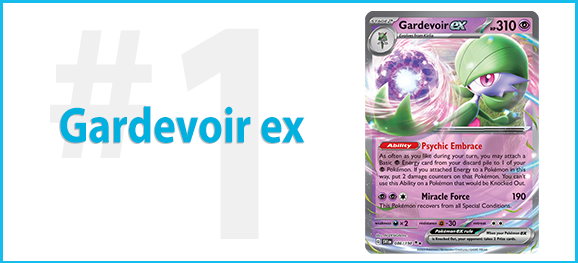 The new Gardevoir ex deck from Scarlet & Violet ended up performing better than most people expected, including a second-place finish at the Europe International Championships. With Scarlet & Violet—Paldea Evolved, it’s likely to become the best deck all around due to many new and returning cards raising its power level.
The first card, Super Rod, allows a player to recover Pokémon from the discard pile without having to use a Supporter. That’s great for a deck that aims to play the long game and might need to get its attackers back after they get KO’d.
Reversal Energy is also a fantastic way to power up your Pokémon when you’re behind on Prize cards. It acts as a 90-damage boost for Gardevoir, allowing it to reach up to 330 damage when you add in the extra Psychic Energy from Gardevoir ex’s Psychic Embrace. Gardevoir is a scary attacker for any deck in the format.
Finally, there’s Iono, the perfect Supporter for Gardevoir ex. In the first few turns, it’s a draw Supporter that doesn’t discard key cards, unlike Professor’s Research. Later in the game, Iono acts as disrupter, especially against Lost Box and other fast decks, which allows Gardevoir ex to come back from a Prize deficit. Gardevoir ex might not draw too many cards itself off a late-game Iono, but that can be supplemented by Kirlia‘s Refinement.
All in all, Gardevoir ex is able to beat more consistent decks that take Prizes faster than it does, which makes it the number one threat for NAIC. — Stéphane Ivanoff
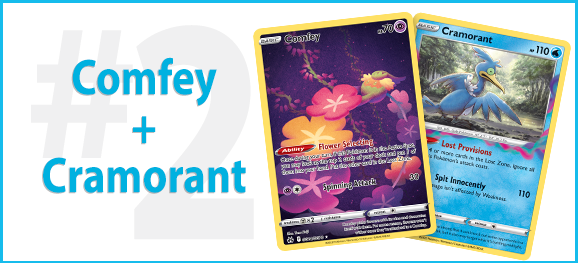 Despite what its name may lead you to believe, Lost Zone Box is a very successful deck. An iteration of this deck has earned a place in the Top 4 at every International Championships this season—including a win at the Oceania event!
The strength of Lost Zone Box comes from its powerful draw engine in Colress’s Experiment and Comfey’s Flower Selecting Ability. These cards create a hand advantage and put cards in the Lost Zone, thereby enabling Cramorant to apply pressure in the early game and Sableye to establish a checkmate position by putting loads of damage counters on the opponent’s Pokémon.
The enduring success of Lost Zone Box can be attributed to how much it can be customized without losing its consistency. Mirage Gate enables players to include a variety of attacking Pokémon to suit the metagame. For example, players may choose to include Drapion V to Knock Out Gardevoir ex in one hit, the new Luxray to take advantage of the shared Lightning-type Weakness of Lugia VSTAR and Origin Forme Palkia VSTAR, or just choose to do loads of damage each turn by focusing on Giratina VSTAR.
The anticipated rise of the Gardevoir ex deck and the Chien-Pao ex / Baxcalibur deck offers new opportunities for Lost Zone Box because Radiant Greninja can take two Prize cards at once by Knocking Out low-HP Pokémon like Ralts, Kirlia, and Frigibax with Moonlight Shuriken. The deck also receives a boost to consistency from the latest Pokémon TCG expansion in the form of Jet Energy.
There are a lot of decisions to make when designing and playing Lost Zone Box. If we see this deck in the Top Cut of the 2023 North America International Championships, I predict that it will be in the hands of an experienced competitor. — Ellis Longhurst
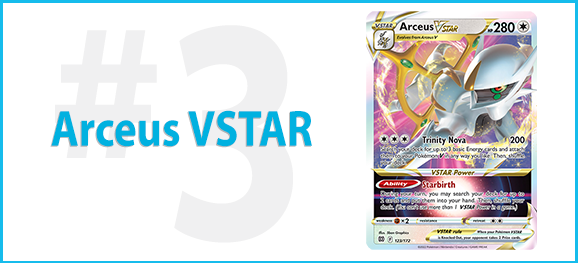 For most of the 2023 Championship Series, Arceus VSTAR has been waiting in the wings for its chance to shine. Sure, it found its way into the winner’s circle once in a while—mostly accompanied by Duraludon VMAX—but it’s not been a major player this year. Giratina VSTAR, too, has had an on-and-off season; it’s mostly been sidelined since the release of Sword & Shield—Silver Tempest. While everyone suspected that Arceus and Giratina could be a good pairing, it’s a duo that finally got a big win at the Portland Regional Championships in early May.
What’s not to like? Arceus has the advantage of one of the most helpful Abilities ever printed in Starbirth. And although it consumes your VSTAR Power for the game, Giratina’s Star Requiem is mostly inaccessible in a deck without Comfey. The magic number for Knocking Out much of the format’s Pokémon VSTAR population is 280, which makes Lost Impact very strong indeed. The final encouraging factor here is the deck’s lack of notable Weakness exposure—Fighting types are at a low point right now, and Giratina obviously has no Weakness at all!
The deck has faded somewhat since winning Portland, so what’s with the new hype? It all has to do with Iono, which promises to be one of the more transformational cards in recent memory. In particular, it works quite well with the Bibarel from Sword & Shield—Brilliant Stars, which is the traditional draw engine of choice in Arceus VSTAR / Giratina VSTAR. Bibarel is excellent insurance against your opponent’s Iono—a very, very valuable trait for NAIC. — Christopher Schemanske
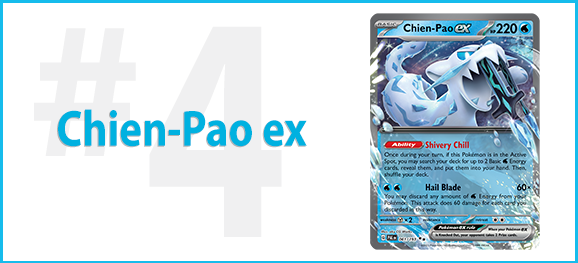 The Ruinous Legend Chien-Pao ex, in combination with Baxcalibur and its Super Cold Ability, brings back one of the most iconic archetypes in the history of the game. It’s been around so long it’s often referred to as Rain Dance, named after the Blastoise in the original Base Set!
The core game plan is simple: Get Baxcalibur into play, attach as much Energy as needed to Chien-Pao ex, and Knock Out the opponent’s Active Pokémon regardless of its HP. Chien-Pao ex’s Shivery Chill Ability makes it easy to find the necessary Energy cards, and setting up Baxcalibur isn’t difficult either thanks to Irida. After the Energy cards have hit the discard pile, use Superior Energy Retrieval to bring them back and continue attacking.
This deck can do even more than that! Chien-Pao ex will generally be the main attacker, but there are a lot of other strong Water-type Pokémon that can be used alongside it, most importantly Radiant Greninja and Origin Forme Palkia VSTAR. Having alternative strategies will be particularly important against decks like the Lost Zone Toolbox that don’t care about being Knocked Out every turn. Expect Chien-Pao ex decks at NAIC to play more like a Water Toolbox rather than a classic big-damage deck.
It’s always exciting to see how the new decks perform and how players decide to approach them, so Chien-Pao ex is definitely a deck I will be following closely this upcoming weekend! — Robin Schulz
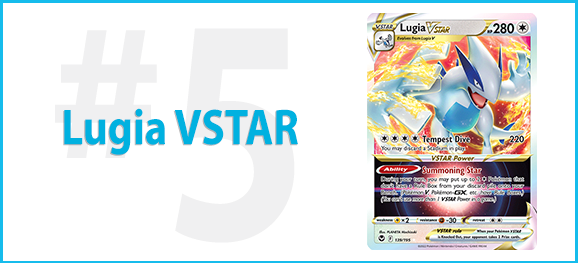 Lugia VSTAR is still an extremely powerful deck, even after rotation took away most of its best Special Energy cards and attacking options. The deck has survived so far mostly thanks to Single Strike Energy and Tyranitar V, letting the archetype still hit for big enough numbers to one-hit-KO most Pokémon in the format. Using Archeops’s Ability to accelerate up to 2 Special Energy cards from the deck every turn—twice—is a real challenge for any deck to overcome. This strategy allowed the deck to win the final Regional Championships of the season in Fresno, right before the release of the next expansion, Scarlet & Violet—Paldea Evolved.
This expansion introduces multiple new Special Energy for Lugia to add to its arsenal, most notably Jet Energy and Therapeutic Energy. One of the few things the deck has not had access to before was an easy way to switch between Pokémon. This was Lugia VSTAR’s biggest vulnerability and spawned multiple counterstrategies to take advantage of this fact in the past. Some decks used Articuno from Sword & Shield—Silver Tempest to Paralyze lock the deck repeatedly, as Lugia VSTAR did not play cards that switched Pokémon out of the Active Spot or remove Special Conditions. Others tried to drain the deck empty of all Energy cards, using Yveltal from Celebrations and Boss’s Orders to trap a Pokémon that could not attack in the Active Spot.
Strategies such as these will no longer work against Lugia VSTAR with the introduction of the new Special Energy. Special Energy also enables more use of Snorlax from Sword & Shield—Lost Origin, as both Energy cards are great for waking up the Sleeping Pokémon. I’m excited to see a potential new Lugia VSTAR variant focusing on Colorless Special Energy instead of Single Strike Energy as we head into the final International Championships of the season! — Tord Reklev
Parting Shots
Stéphane Ivanoff: For the first time since it was released in Sword & Shield—Fusion Strike, Mew VMAX isn’t a part of our top five. But don’t be fooled—it’s still a deck to watch out for! The reason that we’ve ranked it so low is because the new Spiritomb is an excellent counter to Genesect V‘s Ability, which is central to the deck. Despite that, it would be a mistake to declare Mew’s reign over, especially when it recently won Japan’s National Championships.
Yes, Spiritomb is an issue, but not all players will be using it. Plus, if Genesect V has a Fusion Strike Energy attached, it is unaffected by Spiritomb’s Fettered in Misfortune Ability, so it can still use Fusion Strike System. There’s one more trick up Mew VMAX players’ sleeves: by using Eiscue, they can KO Spiritomb on the Bench, making it a non-factor.
This is not to say that Spiritomb is useless. It does make Mew VMAX’s life much harder, but it’s still kicking. With so many players having invested their time and energy in the deck, it will surely have a presence at NAIC. Will it shine again, or will it finally be shown to be outclassed? That’s something we’ll find out soon.
Ellis Longhurst: The North America International Championships is, arguably, the most exciting Pokémon TCG event on the calendar each season. Historically, this event has attracted more competitors each year than almost any other Pokémon TCG competition in the world. Unlike the World Championships, the NAIC is not invitation-only. This means that local heroes have the opportunity to face off against the world’s best, cause an upset, and record their names in the annals of the Pokémon TCG. It is also the final opportunity for players to earn the Championship Points they need to qualify for the World Championships, which this year are being held for the first time in Japan, the ancestral homeland of Pokémon. I imagine that emotions will run higher than ever for competitors at the 2023 NAIC.
You may have noticed that Mew VMAX is absent from this edition of the Power Rankings. Popular opinion is that the new Spiritomb from the Pokémon TCG: Scarlet & Violet—Paldea Evolved will keep Mew VMAX quiet by shutting down Genesect V’s Fusion Strike System Ability. However, the success of the Fusion Strike Energy-focused build of Mew VMAX at the 2023 Japan Championships has given competitors a lot to think about. My psychic powers tell me that this is not the last we’ll see of Mew VMAX.
Tord Reklev: Scarlet & Violet—Paldea Evolved is one of my favorite expansions in years, which is natural since my favorite format is from the original Pokémon ex era back in 2006. Cards such as Rocket’s Admin. and Scramble Energy have been reincarnated as Iono and Reversal Energy. These types of cards naturally create interesting games, as it’s no longer a given that players will take an available Knock Out, and they must carefully consider whether taking the Prize advantage will be advantageous with their current board state. We might see stalemates with both players are holding off on a Knock Out until they can avoid retaliation occurring more often.
Iono also introduces another level of difficulty by challenging a player’s memory. Since both hands are shuffled to the bottom of the deck, players now must decide whether they want to find a way to shuffle the deck before they continue to draw cards. Depending on which cards were shuffled to the bottom, it could affect the chances of finding the crucial pieces needed for the turn.
I couldn’t be more excited about the direction the game is heading! I believe the North America International Championships will provide us with some incredible matches!
Christopher Schemanske: Sword & Shield—Battle Styles through Scarlet & Violet has been one of my favorite formats ever. The viable decks and the fun, interactive matchups they’ve provided have been a blast and have sparked awesome battles between top players. It’s especially notable how many different decks found success at Regionals, which I believe is a testament to the strength of the diverse strategies that have appeared throughout this format.
Scarlet & Violet—Paldea Evolved, though, is shaking up the landscape. In fact, I don’t remember a single expansion changing so much about the metagame in one fell swoop. New Pokémon ex like Chien-Pao ex are introducing new strategies that will change the metagame and reshape how the existing competitors find success. More than anything, though, the impact of Iono can’t be underestimated. Decks have been playing large counts of Judge in recent formats, and while that was nice, the hand disruption offered by Iono will take things to a whole new level. I consider this an existential threat to the current version of Lost Zone Box, which relies heavily on building up a large hand.
There’s one area in which our panel has it wrong, though: I believe that Mew VMAX should not be counted out. I would personally rank it no lower than third on our list—its strength hasn’t changed at all, and I don’t believe for a second that Spiritomb will manage to finish Drapion V’s mission of eliminating Mew from the metagame. Disrespect Mew at your own peril.
Robin Schulz: Back in London at the 2022 World Championships, the game designers announced a renewed focus on comeback mechanics for the Scarlet & Violet Series. While we didn’t see much of it in the Scarlet & Violet expansion, Scarlet & Violet—Paldea Evolved more than delivers in that aspect!
Iono and Reversal Energy are two of the strongest comeback cards we’ve ever seen, and they have the potential to change the way the game is played. Don’t be surprised if someone on stream at NAIC passes their turn instead of taking an available Knock Out—that can now be the correct play to avoid a Reversal Energy-aided counterattack too early. Navigating these situations will be no easy task for players!
I think most of you would agree that games are the most interesting when you can’t tell who’s going to win until the very end, and a card like Iono helps make that happen. One player might be up in Prizes, but as long as they still need cards from their hand, a well-timed Iono will almost always have the potential to turn things around. N from Black & White—Noble Victories is one of my favorite cards of all time, so I’m very happy that this effect is now back in the Standard format.
I’m confident in saying we’re in for some very exciting games at NAIC this year, so don’t miss the action!

Stéphane Ivanoff
Stéphane Ivanoff is a contributing writer for Pokemon.com. A longtime Pokémon fan, he has played the Pokémon TCG competitively since 2010 and is a former National Champion, seven-time Worlds competitor, and the 2018 and 2019 North America International Champion in the Masters Division. He studied mathematics and has a degree in Probability and Statistics, but he says that doesn’t help his game as much as you’d think! You can follow him on Twitter @lubyllule.

Ellis Longhurst
Ellis Longhurst is a contributing writer for Pokemon.com. She has been competing in high-level Pokémon TCG tournaments since 2006 and creating written content for the Pokémon community since 2011. Now she brings some Australian flavour to the Play! Pokémon commentary teams at the International and World Championships.

Tord Reklev
Tord Reklev is a contributing writer for Pokemon.com. He is a longtime player from Norway, playing the game since he was 6 years old. In becoming Champion at the 2022 Latin America International Championships, Tord is the first player to win all four International Championships and complete the Grand Slam. Outside of the game, he is a student and enjoys playing tennis. You can find him at most big events and can follow him on Twitter at @TordReklev.

Christopher Schemanske
Christopher Schemanske is a contributing writer for Pokemon.com. He’s been playing the Pokémon TCG since 2010, with a streak of Worlds invitations between 2012–2018. Nowadays, he enjoys splitting his Pokémon time between playing and being part of the awesome Professor staff teams at major events.

Robin Schulz
Robin Schulz is a contributing writer for Pokemon.com. He has been competing in Pokémon tournaments for 10 years and was the Pokémon TCG Masters Division World Champion in 2018. He spends a lot of time traveling and competing, and he rarely misses a big event. Aside from playing Pokémon, he attends university, where he is studying mathematics.
Source: Pokemon.com
North America International Championships 2023 | Event Experience
Tune into the 2023 Pokémon North America International Championship happening in Columbus, Ohio on Friday, June 30th to Sunday, July 2nd!
Pokémon Center Pop-Up Store Registration System for North America Internationals
Reserve your spot to shop in Columbus.
With huge crowds of Pokémon fans expected to attend the Pokémon North America International Championships, a reservation system for the on-site Pokémon Center Pop-Up Store has been added to ensure a positive experience for everyone who attends. Visitors can reserve a specific time to shop, resulting in shorter lines and less of a wait. Reservations are strongly recommended, and walk-up visitors will be admitted only as capacity allows. Reservations are limited, so be sure to get your spot.
As a reminder, the Pokémon Center Pop-Up Store will feature Internationals-exclusive products, as well as a selection of other items carried at PokemonCenter.com. The store is open to the general public, so you will not need a participant or spectator badge to shop.
The reservation system is now live. Reserve your spot now.
Source: Pokemon.com
2023 North America International Championships Live Stream Information
Hopeful Trainers are headed to Columbus, Ohio, for the North America International Championships, the final International Championships event of the 2023 Championship Series season. Pokémon TCG, video game, and Pokémon GO players will have their skills tested as they continue their efforts to qualify for the 2023 Pokémon World Championships.
Pokémon UNITE teams will also join in the action, as the last rounds of the Regional Finals will take place alongside the main events.
You’ll be able to watch many exciting Pokémon battles live from Columbus, Ohio, all weekend long, from Friday, June 30, 2023, through Sunday, July 2, 2023.
Don’t forget to check out the winning teams and decks at Pokemon.com/EventResults once the tournament is complete.
All times Pacific Daylight Time. All times approximate and subject to change.
What to Watch: Pokémon TCG
Dedicated Pokémon TCG stream: Twitch.tv/PokemonTCG
Commentators: Chip Richey (@ChipRichey), Shelbie Bou (@FrostedCaribou), Jeremy Jallen (@JeremyJallen), Pablo Meza (@tablemon), and Adam Watson (@Scarzig)
Friday, June 30: 6:00 a.m. – 5:00 p.m.
- Day 1 Swiss Rounds
Saturday, July 1: 6:00 a.m. – 5:00 p.m.
- Day 2 Swiss Rounds
- Top 8 and Top 4
Sunday, July 2: 8:00–11:30 a.m.
- Finals on Twitch.tv/Pokemon
What to Watch: Pokémon VGC
Dedicated Pokémon VGC stream: Twitch.tv/Pokemon
Commentators: Adam Dorricott, Rosemary Kelley (@Nekkra), Scott Glaza (@PKMNostrom), Joe Brown (@Xeminan), and Sierra Dawn (@sierradawnx3)
Friday, June 30: 6:00 a.m. – 5:00 p.m.
- Day 1 Swiss Rounds
Saturday, July 1: 6:00 a.m. – 5:00 p.m.
- Day 2 Swiss Rounds
- Top 8 and Top 4
Sunday, July 2: 11:30 a.m. – 2:00 p.m.
- Finals on Twitch.tv/Pokemon
What to Watch: Pokémon GO
Dedicated Pokémon GO stream: Twitch.tv/PokemonGO
Commentators: Gabby Snyder (@GabbySnyder), Will Dunphey (@SpeediestChief2), Caleb Peng (@CalebPeng), and Steven Sanders (@2Obutters)
Friday, June 30: 6:00 a.m. – 5:00 p.m.
- Group Stage
Saturday, July 1: 6:00 a.m. – 5:00 p.m.
- Bracket Stage until Top 3
Sunday, July 2: 6:00–8:00 a.m.
- Finals begin on Twitch.tv/Pokemon
What to Watch: Pokémon UNITE
Dedicated Pokémon UNITE stream: Twitch.tv/PokemonUNITE
Commentators: Jake “Spragels” Sprague (@spragels), Kirk “Doobsnax” Dubé (@doobsnax), Joshua “Zoinks” Hiebert (@ZOINKScasts), and Evan “Wonderchef” Hashimoto (@EGPWonderChef)
Friday, June 30: 6:00 a.m. – Noon
- Winners’ Round 1 and 2
- Losers’ Round 1
Saturday, July 1: 6:00–11:00 a.m.
- Losers’ Quarterfinals to Grand Finals
Source: Pokemon.com
 Pokémon Blog
9 thoughts on “Pokémon VGC Roundtable Preview revealed for the 2023 Pokémon North America International Championships”