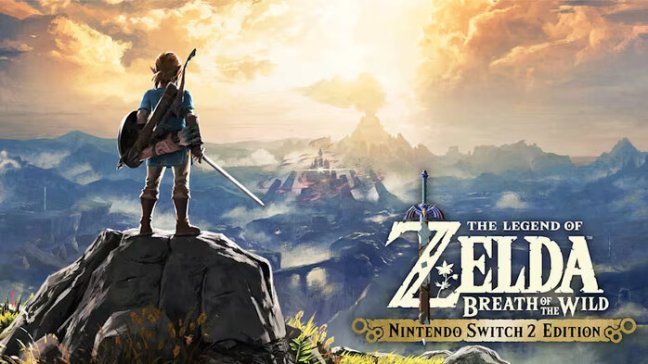
The Legend of Zelda: Breath of the Wild – Nintendo Switch 2 Edition remains one of the most influential open world action adventure games ever made, and after a combined 235 plus hour personal experience spanning the original Nintendo Switch release in 2017 and the upgraded version, it continues to stand as a defining title in 2026 thanks to its exploration-driven design, system-driven freedom and timeless art direction that still feels remarkably modern nearly a decade later.
From the opening moments on the Great Plateau, the game establishes its identity around player-driven discovery, with the Sheikah Slate serving as the central progression system that replaces traditional Zelda item structures through abilities like Magnesis, Stasis, Cryonis and Remote Bombs, which support physics-based experimentation and flexible problem solving across the world of Hyrule.
Exploration remains the strongest pillar of the experience, with a vast interconnected world that consistently rewards curiosity whether climbing mountains, crossing open fields or discovering hidden ruins. Over 100 Shrines provide compact puzzle-focused challenges that remain satisfying to solve even if their structure can feel repetitive over extended play. Towns such as Kakariko Village and Hateno Village feel memorable and lived in, while regional hubs like Gerudo Town in the desert, Zora’s Domain built around waterfalls and verticality, Rito Village shaped by wind and flight and Goron City rooted in volcanic heat each give Hyrule a strong sense of cultural identity that reinforces both variety and cohesion. Tarrey Town stands out as one of the most rewarding side quest chains in the entire game as it transforms a remote area into a fully functioning settlement through long-term player involvement. Systems like horse taming, stable travel and purchasing and upgrading Link’s house in Hateno Village add grounding and a strong sense of personal progression. Side quests overall are extremely rewarding and often encourage meaningful exploration rather than acting as filler content.
Combat is responsive and flexible, built around a wide variety of breakable weapons, bows and shields that encourage improvisation and adaptation in every encounter. The weapon durability system can occasionally interrupt flow when preferred gear breaks during exploration or combat. The world is supported by strong environmental storytelling and memorable characters, with the Champions Mipha, Daruk, Urbosa and Revali adding emotional weight to the narrative. The Champions also grant permanent abilities that directly impact gameplay, including Mipha’s Grace which revives Link when defeated, Revali’s Gale which provides vertical mobility, Daruk’s Protection which blocks incoming attacks and Urbosa’s Fury which delivers a powerful lightning strike, all of which meaningfully expand both combat and traversal options. Link serves as a silent protagonist while Zelda’s characterization may resonate differently depending on player preference and voice acting adds atmosphere without overwhelming the tone of the experience.
Certain design choices become more noticeable over long play sessions. Rain can prevent climbing and interrupt traversal pacing. Lightning forces equipment adjustments that can feel restrictive. Shrine content becomes familiar over time. Korok seed collection is extensive but not personally engaging as a long-term activity. NPC interactions where background characters freeze during dialogue scenes can reduce immersion in otherwise lively towns. Some Divine Beast interiors and select shrine or dungeon environments including DLC-related spaces can appear visually muted or harder to read, which occasionally affects spatial clarity despite the otherwise strong and cohesive art direction.
The Nintendo Switch 2 Edition improves performance significantly with faster load times, smoother frame pacing and sharper visuals across both handheld and docked modes, reinforcing how well the original art direction has aged while making exploration and fast travel feel noticeably more seamless. The optional Zelda Notes integration through the Switch app feels unintuitive and disconnected from the core experience. The Expansion Pass remains separate from this edition and adds additional challenge content and a memorable final sequence featuring the Master Cycle Zero reward and a reflective group image of Link, Zelda and the Champions, but ultimately functions as optional post-game content rather than a required extension of the main experience.
Breath of the Wild remains a landmark open world experience built around freedom, discovery and system-driven interaction that continues to reward curiosity even after hundreds of hours. It stands as a strong recommendation for anyone wondering whether it is worth playing on Nintendo Switch 2 or revisiting in 2026.
Final score: 9.5 out of 10
Based on an overwhelmingly positive long-term experience defined by unmatched exploration freedom, memorable side content, strong system-driven gameplay depth and enduring world design, tempered by recurring traversal friction, occasional repetition in shrine and collectible systems and situational clarity constraints rather than any fundamental limitation in its core design.
Pokémon Lens
Breath of the Wild connects to Pokémon through its emphasis on system-driven exploration and player-driven discovery where abilities function like flexible move sets that change how the world is interacted with rather than simply unlocking linear progression. Shrines function as self-contained challenge encounters that resemble focused battle or puzzle scenarios.
The overall design philosophy mirrors Pokémon’s gradual shift toward open world structure and experimentation, prioritizing curiosity, system mastery and emergent problem solving over strictly linear progression paths.


2 thoughts on “The Legend of Zelda Breath of the Wild Nintendo Switch 2 Edition Review | Is It Still Worth Playing in 2026?”