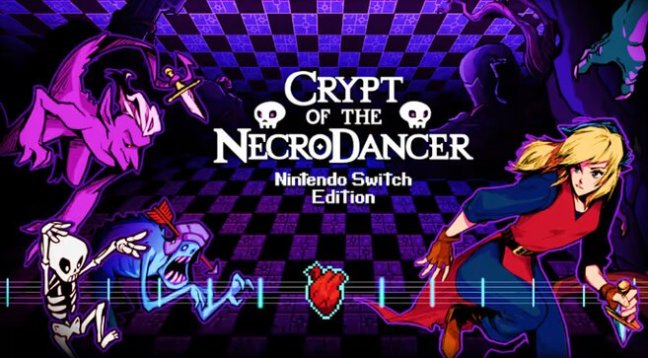
Crypt of the NecroDancer: Nintendo Switch Edition is one of the most creative rhythm games ever made, combining dungeon crawling, roguelike progression and music-based movement into a unique experience that has earned strong critical praise since its original release. After spending time with the Nintendo Switch version and testing it on Nintendo Switch 2 through backward compatibility, I can understand why the game has developed such a dedicated following thanks to its deep systems, huge amount of content and impressive replay potential. However, the same design choices that make Crypt of the NecroDancer stand out are also what prevented me from enjoying it, as the strict rhythm-based movement, punishing gameplay loop and presentation style never connected with me.
The game’s strongest quality is its incredible amount of variety and replay value. Different characters offer different approaches to the same dungeon structure, creating unique challenges and playstyles for players who want to experiment. The game features a large selection of weapons, upgrades, abilities and unlockable content, giving dedicated players a tremendous amount to discover. Every run can feel different depending on the character, equipment and decisions made along the way, and completion-focused players can easily spend hundreds of hours mastering its systems. The core concept of combining rhythm gameplay with roguelike progression is also undeniably creative, creating a structure where movement, combat and decision-making are connected to the music.
The audio design is one of the game’s more memorable elements. The soundtrack can help players stay engaged with the rhythm-based mechanics, and specific details like the opera singer merchant whose vocals become louder as you approach add personality to the world. The game also provides a surprising amount of mechanical depth, with different items, abilities and character options encouraging experimentation rather than a single fixed strategy. For players who connect with the rhythm system, Crypt of the NecroDancer offers a highly replayable challenge built around improving skill and understanding enemy patterns.
Despite appreciating the creativity behind the design, the core gameplay experience never clicked with me. The controls themselves are responsive, but the rhythm-based movement system makes the entire game feel restrictive because every movement and attack must be carefully tied to the beat. Rather than creating a satisfying sense of flow, the constant requirement to maintain rhythm made the experience feel limiting and frustrating. Missing a beat can quickly lead to punishment, and enemy encounters often felt overwhelming rather than rewarding. Even after trying different characters, including alternatives that change how movement works, the overall experience still felt tedious because the underlying structure remained the same.
The difficulty curve was another major barrier. I enjoy challenging games, but Crypt of the NecroDancer creates a very specific type of challenge that depends on adapting completely to its rhythm-focused philosophy. Unlike traditional action games where players can freely adjust positioning and timing, this game requires a different mindset where hesitation and missed beats have immediate consequences. For players who enjoy mastering that system, the difficulty likely becomes the main attraction, but for me it created frustration rather than motivation.
The presentation also struggled to connect with me. The pixel art style, environments, menus and overall interface feel intentionally old school, but the visual direction did not appeal to my preferences. The blocky environments and rough presentation made the game feel less inviting, especially compared with modern games that use pixel art with more detailed visual identities. This is a personal preference rather than a technical criticism, but the overall look made it harder for me to become invested in the world. The experience also felt repetitive over time because the same core rhythm-based structure drives nearly every encounter.
Crypt of the NecroDancer: Nintendo Switch Edition remains an ambitious and mechanically impressive game that clearly offers tremendous value for players who enjoy its unique combination of rhythm, strategy and roguelike systems. However, after giving the experience a fair opportunity, I found that the restrictive movement, punishing rhythm mechanics and visual presentation worked against my enjoyment rather than enhancing it. This is a game where the design philosophy is either likely to become the reason you love it or the reason you struggle to connect with it, and in my case, the experience never reached the level that its reputation suggested.
Final Score: 5.5 out of 10
Crypt of the NecroDancer: Nintendo Switch Edition boasts creativity, replay value, character variety, an impressive unlock system and strong mechanical depth, but the core rhythm-based gameplay structure, restrictive movement design, punishing difficulty and presentation style prevented me from enjoying the experience. The game has a passionate audience and a strong foundation, but its appeal depends heavily on connecting with a very specific style of gameplay.
Pokémon Lens
Crypt of the NecroDancer connects to Pokémon through its emphasis on understanding systems, adapting strategies and building mastery over time. Similar to Pokémon, where players learn type matchups, move combinations and team-building strategies, Crypt of the NecroDancer rewards players who study enemy patterns, experiment with different abilities and develop a deeper understanding of its mechanics. Both games rely on systems knowledge as a pathway to improvement, but Crypt of the NecroDancer takes that philosophy in a more timing-focused direction by making rhythm mastery the foundation of progression.
 Nintendo & Pokémon Blog
One thought on “Crypt of the NecroDancer: Nintendo Switch Edition Review | A Creative Rhythm Roguelike That May Not Click With Everyone”