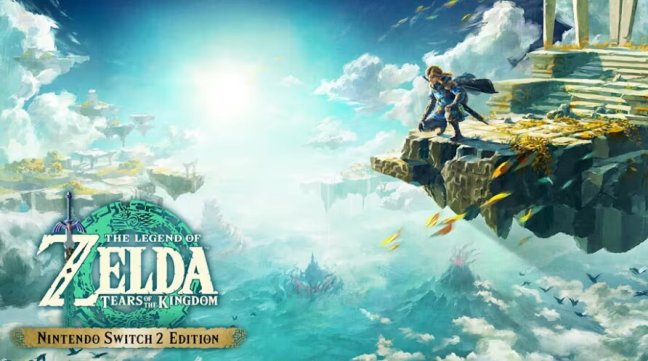
The Legend of Zelda: Tears of the Kingdom is one of Nintendo’s most ambitious games ever created. As a sequel to the groundbreaking Breath of the Wild, Nintendo did not simply create another Zelda adventure; it expanded nearly every aspect of the formula with new abilities, sky islands, underground exploration and a completely different approach to creativity.
After more than 115 hours, completing most Shrines, nearly all Lightroots and collecting over 100 Korok Seeds, my journey through Hyrule was extensive. I began playing on the original Nintendo Switch before continuing on the Nintendo Switch 2 Edition upgrade, giving me the opportunity to experience both versions of one of Nintendo’s biggest modern releases.
Tears of the Kingdom is an incredible achievement, but it also raises an interesting question: does expanding everything necessarily create a better experience? While Nintendo’s sequel is filled with impressive ideas and unforgettable moments, I ultimately preferred the simplicity, focus and sense of discovery that made Breath of the Wild such a special experience.
The Nintendo Switch 2 Edition Is the Definitive Way to Play
The Nintendo Switch 2 Edition improves an already excellent game in meaningful ways. The biggest improvement is immediately noticeable: loading times are significantly faster. Traveling between areas, entering locations and returning after fast travel feels much smoother compared to the original Nintendo Switch version.
Tears of the Kingdom also looks fantastic on Nintendo Switch 2. Higher resolution, improved visuals and HDR support while playing docked make Hyrule look better than ever on a modern television. Handheld mode benefits just as much, with the Switch 2’s upgraded display making exploration feel crisp and immersive wherever you play. Performance remains excellent, with the game running smoothly both docked and handheld. For returning players who already own Tears of the Kingdom, the Nintendo Switch 2 Edition is easily the best way to revisit Hyrule.
Zelda Notes is another addition included with the upgraded experience. It provides players with an official way to track progress, discover points of interest and work toward completing everything. However, it still feels somewhat separate from the actual adventure rather than being deeply integrated into the game itself.
Tears of the Kingdom Expands Breath of the Wild’s Formula
The greatest strength of Tears of the Kingdom is how much freedom Nintendo gives players. Link’s new abilities completely change how players interact with Hyrule. Ultrahand allows players to build machines, vehicles and creative solutions to problems. Fuse makes weapons more versatile by letting players combine materials and create stronger equipment. Recall and Ascend introduce new ways to approach exploration and puzzles.
The creativity is genuinely impressive. Few games allow players to experiment at this level, and Nintendo deserves credit for creating systems that encourage curiosity and experimentation. However, the increased complexity was not always a positive for me personally.
Breath of the Wild’s Sheikah Slate abilities were simple and immediately understandable. Tears of the Kingdom replaces that system with the Zonai arm abilities and a much larger collection of mechanics. While these tools are impressive, I sometimes missed the elegant simplicity of the previous game. The building mechanics especially were not always my preferred way to play. Creating elaborate machines is undeniably clever, but I often found myself wanting to simply explore rather than spend time designing vehicles and managing Zonai devices.
Returning to Hyrule Is Both a Strength and Weakness
One of Tears of the Kingdom’s biggest challenges is that it returns players to the same version of Hyrule. Nintendo did a great job changing the world. Towns have evolved, new quests are available and countless secrets have been added. However, after spending more than 100 hours with Breath of the Wild, the sense of discovery naturally changes.
Breath of the Wild felt like stepping into an unknown world where every mountain and landmark was a mystery. Tears of the Kingdom feels like returning to a familiar place and searching for what has changed. That is not necessarily a flaw, but it does mean the sequel never recreates the same magical first experience.
The Sky Islands Are Full of Potential
The sky is one of the most exciting additions to Tears of the Kingdom. The opening section immediately creates a feeling of wonder and mystery. Floating islands above Hyrule seem like they could contain an entirely new civilization waiting to be discovered. Unfortunately, the sky does not fully live up to that potential. Many sky islands are enjoyable, but the overall experience feels smaller than expected. Outside of the opening areas and a handful of memorable locations, the sky feels more like an additional layer to Hyrule rather than a major new world.
The Depths Feel Like a Missed Opportunity
The Depths are the most disappointing addition for me. The concept is fantastic: an enormous underground world beneath Hyrule filled with mystery, danger and exploration. However, the execution becomes repetitive over time. Large portions of the Depths share a similar dark atmosphere, and exploration often becomes a routine of finding Lightroots, defeating enemies and moving toward the next objective. Instead of feeling like a mysterious hidden kingdom, the Depths eventually became something I wanted to complete rather than something I was excited to explore. There was so much potential for unique environments, memorable locations and surprises, but the underground world often feels empty compared to the vibrant Surface.
Caves Add More Content, But Not Always More Discovery
Caves are another major addition, but they suffer from similar problems. While discovering hidden entrances can initially be exciting, many caves begin to feel repetitive. The general structure often becomes entering a cave, fighting enemies, collecting resources and searching for similar rewards. They add more content to Hyrule, but they do not always provide the same sense of wonder that made Breath of the Wild’s exploration so memorable.
Ganondorf’s Return Is a Major Highlight
One of the biggest improvements in Tears of the Kingdom is the return of Ganondorf. Breath of the Wild’s Calamity Ganon served its purpose, but Ganondorf brings back the personality and presence of a traditional Zelda villain. He feels like a more memorable and intimidating threat, and his return gives the story a stronger antagonist. Following Zelda’s mystery throughout the adventure remains the main motivation, although the storytelling is still very much secondary compared to the exploration.
The Sages Create a Stronger Sense of Adventure
The Sages are another excellent addition. Rather than simply receiving abilities like Breath of the Wild’s Champion powers, Link now travels alongside companions connected to the different regions of Hyrule. Having allies from the Rito, Gerudo, Zora and Goron communities creates a stronger feeling of teamwork. Their abilities become valuable tools throughout the adventure, and having a group of powerful allies traveling alongside Link makes the journey feel more like a traditional Zelda adventure.
Familiar Frustrations Return
Some of Breath of the Wild’s most divisive mechanics return. Weapon durability remains controversial, although Fuse helps make the system easier to manage by allowing players to constantly create improved weapons. Rain and lightning can still interrupt exploration. Slippery climbing during storms remains frustrating, especially in a game built around freedom and exploration.
The opening also repeats a familiar Zelda structure: Link begins with powerful abilities before losing everything and rebuilding from the beginning. While this creates progression, it can feel unnecessary after experiencing a similar setup in Breath of the Wild.
Final Thoughts
The Legend of Zelda: Tears of the Kingdom is an extraordinary sequel and one of Nintendo’s boldest creative experiments. Few games offer this level of freedom, creativity and player expression. Ultrahand, Fuse and the expanded world create moments that feel completely unique to Nintendo. However, Tears of the Kingdom also demonstrates that more content does not always create a better experience. The sky, Depths, caves and additional mechanics make Hyrule larger than ever, but they sometimes come at the expense of the elegant simplicity that made Breath of the Wild so unforgettable.
For me, Breath of the Wild remains the stronger experience because it felt more focused and revolutionary. Tears of the Kingdom is still an incredible game, but it occasionally feels like Nintendo expanded the formula so much that some of the original magic became harder to find. After more than 115 hours, there is no denying how impressive this adventure is. Nintendo created one of the most ambitious open-world games ever made, even if I personally preferred the cleaner design of its predecessor.
Final Score: 9 out of 10
The Legend of Zelda: Tears of the Kingdom – Nintendo Switch 2 Edition is the definitive version of one of Nintendo’s greatest modern adventures. It is bigger, more creative and more ambitious than Breath of the Wild, but sometimes its massive scope prevents it from reaching the same level of focus and discovery.
Pokémon Lens
Tears of the Kingdom and Pokémon both represent Nintendo franchises that continue evolving by experimenting with new ideas. Just as Pokémon Pokopia explored what life alongside Pokémon could look like beyond catching and battling, Tears of the Kingdom explores what Zelda can become beyond traditional dungeon progression. Both games prove Nintendo’s greatest strength is its willingness to take risks. Not every new direction will appeal equally to every player, but that creativity is what keeps Nintendo’s most iconic franchises feeling fresh decades later.


One thought on “The Legend of Zelda: Tears of the Kingdom – Nintendo Switch 2 Edition Review | A Brilliant Sequel That Sometimes Feels Too Big”