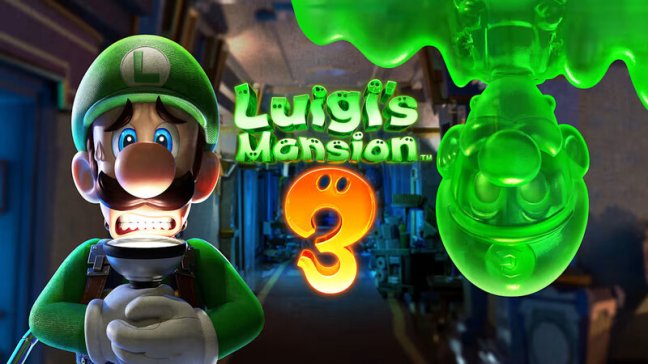
Luigi checks into a haunted hotel and ends up doing all the work.
Luigi’s Mansion 3 stands out immediately for its presentation. Every floor is distinct, with strong art direction that gives the hotel real personality and staying power. Luigi remains a charming lead, supported by light voice snippets from Charles Martinet that sell his nervous energy. The game also introduces Gooigi, a second playable version of Luigi that opens up clever puzzle design and occasional combat twists, including moments where boss fights shift between both characters for layered encounters.
Boss fights are a highlight. Most are creative and tied closely to their floor themes. Paranormal Productions turns a movie set backlot into a kaiju inspired showdown against a Goob in a Ghostzilla costume, a standout example of how the game keeps encounters visually and mechanically fresh.
That creativity is often undercut by repetition. The core ghost-catching loop does not evolve much over time, and frequent backtracking can make progress feel padded. Controls also add friction, with the Poltergust and general movement feeling clunky compared with smoother Nintendo platformers. Gooigi helps soften some of this through puzzle variety, but does not fully offset the control issues.
Pacing takes another hit from interruptions. Professor E. Gadd frequently halts gameplay with calls and dialogue that cannot be ignored, breaking flow at moments that should feel more hands-on. Rescued Toads also lack personality, and the supporting cast does little to match Luigi’s charm.
Luigi’s Mansion 3 succeeds through style, creativity and standout set pieces, but it is held back by repetition and pacing issues that become more noticeable over time. It is an easy game to admire, even if it is not always smooth to play.
7.5/10
Pokémon Lens:
While Luigi’s Mansion 3 isn’t structured like most Pokémon games, it shares a similar appeal in capturing and cataloging creatures, echoing the series’ long-standing “collect them all” design philosophy. Where Pokémon often builds depth through team composition or system variety depending on the genre, Luigi’s Mansion 3 keeps its focus on puzzle-solving and moment-to-moment encounters. The result is a charming but more repetitive loop, even if the ghost designs carry a similar personality-driven appeal.


One thought on “Luigi’s Mansion 3 Review”